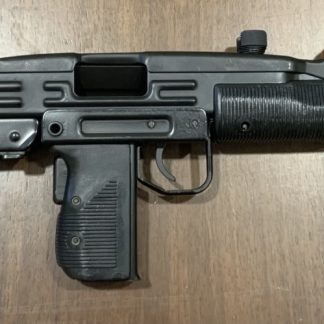
SEMI-AUTOMATIC HANDGUNS & PISTOLS
HOW TO USED SEMI-AUTOMATIC HANDGUNS & PISTOLS
A semi-automatic pistol (sometimes automatic pistol) is a handgun that automatically ejects and loads cartridges in its chamber after every shot fired. Only one round of ammunition is fired each time the trigger is pulled, as the pistol’s fire control group disconnects the trigger mechanism from the firing pin/striker until the trigger has been released and reset.
Additional terms sometimes used as synonyms for a semi-automatic pistol are self-loading pistol, autopistol, autoloading pistol, and automatic pistol.
A semi-automatic pistol recycles part of the energy released by the propellant combustion to move its bolt, which is usually housed inside the slide. After a round of ammunition is fired, the spent cartridge casing is extracted and ejected as the slide/bolt moves rearwards under recoil, the hammer/striker is cocked by the slide/bolt movement, and a new round from the magazine is pushed into the chamber when the slide/bolt returns forward under spring tension.
This sets up the following shot, which is fired as soon as the trigger is pulled again. Most pistols use a short recoil operation to perform this, but some pistols use simple blowback or gas operation mechanisms.Most types of semi-automatic pistols rely on a removable box magazine to provide ammunition, which is usually inserted into the grip. However, some pistols are based on receiver-style designs similar to existing semi-automatic rifles, and thus have the magazine inserted separately from the grip.
operation
Semi-automatic pistols use one firing chamber that remains fixed in a constant linear position relative to the . In contrast, although double-action revolvers can also be fired semi-automatically, their rounds are not fired from a single chamber, but rather are fired from each of the chambers that are rotated into linear alignment with the barrel’s position in turn just prior for each shot fired.
Typically, the first round is manually loaded into the chamber by pulling back and releasing the slide mechanism. After the trigger is pulled and the round is fired, the recoil operation of the handgun automatically extracts and ejects the shell casing and reloads the chamber. This mode of operation generally allows for faster reloading and storing a larger number of cartridges than a revolver.
Some modern semi-automatic pistols are double-action only (DA or DAO); that is, once a round is chambered, each trigger pull cocks the hammer, striker, or firing pin, and additionally releases the same to fire a cartridge in one continuous motion. Each pull of the trigger on a DAO semi-automatic pistol requires the same amount of pressure. The Kel-Tec P-32 is an example of a DAO action. DAO semi-automatic pistols are most generally recommended only in the smaller, self-defense, concealable pistols, rather than in target or hunting pistols.
A notable exception is the Glock range of pistols, which optimize preset triggers (similar to DAO), but the striker is partially cocked back as the slide closes. This allows for significantly shorter trigger pulls than DAO. The trigger spring can be replaced with a lighter one and paired with a low-strength sear connector resulting in lightened trigger pulls to improve a shooter’s accuracy (like models G34 and G35).

A Smith & Wesson CS45 double-action/single-action pistol, chambered in .45 ACP
Standard modern semi-automatic pistols are usually double-action (DA), also sometimes known as double-action/single-action (DA/SA). In this design, the hammer or striker may be either thumb-cocked or activated by pulling the trigger when firing the first shot.
The hammer or striker is recocked automatically during each firing cycle. In double-action pistols, the first pull of the trigger requires roughly twice as much pressure as subsequent firings, since the first pull of the trigger also cocks the hammer (if not already cocked by hand).
The Beretta 92F/FS is an example of this style of action. A common mode of carry for DA semi-automatic pistols is with the magazine full, a round chambered, and the gun holstered and uncocked with the external safety unengaged or off. The Taurus PT145 is an example of a DA/SA weapon, as it has no decocker and thus has its striker primed from the moment of chambering and only enters double-action mode if a round fails to fire upon the pin’s impact; at other times, it operates as a single-action striker-fired firearm.
In contrast, a single-action (SA) semi-automatic pistol must be cocked by first operating the slide or bolt, or, if a round is already chambered, by cocking the hammer manually. The M1911 is an example of this style of action. All SA semi-automatic pistols exhibit this feature and automatically cock the hammer when the slide is first “racked” to chamber a round. A round can also be manually inserted in the chamber with the slide locked back.
Then the safety can be applied. It is generally not a good idea to load a round manually as this can cause excessive wear on the extractor as semi-automatic firearms were designed to have cartridges loaded from the bottom via the magazine.
How to Use a Semi-Automatic Pistol
If you are just getting into shooting — maybe you just got your first gun or you’re thinking about getting one — this video is for you. This will not make you a great shooter and it’s definitely not a replacement for professional in-person training, which something I highly recommend that you pursue, but I’m going to try to help you get going in the right direction. You’re going to learn how to make the gun work and how to minimize the risk of having some kind of accident.
As is usually the case with hands-on instructional material, a lot of this information is easiest to explain through video, which we’ve embeded below. If you’d rather digest the info in text-form, the transcript appears below the video, with a few points slightly modified to make up for what’s lost in translation from moving pictures to the written word.
If you’re a new gun owner, we need to start by talking about safety. Handling firearms is an inherently dangerous activity. Every time you pick up a gun, you are making life and death decisions. That’s something we can’t ever forget. Fortunately, we can mitigate a lot of that risk by following the four basic rules of safe gun handling. You might hear these worded in a number of different ways, but I’ll give you my summary:
- Treat all guns the same way you would treat a loaded gun.
You cannot ignore the other three rules just because you believe a gun is unloaded. - Always keep the gun pointed in a safe direction.
That means, if it were to fire, it’s not going to hurt anyone and it’s not going to damage anything you can’t afford to replace. - Keep your finger away from the trigger until you are ready to shoot something.
Pretty straightforward, but that’s the one people seem to have the most trouble remembering. - Know what it is you are shooting at and what is behind it.
That goes for the shooting range or anywhere else you might need to use your gun.
There’s a lot more to using a gun safely than just the four rules, but if you follow them, you greatly reduce your chance of unintentionally hurting yourself or someone else.
There are multiple ways to do just about everything I’m about to show you. These aren’t necessarily the correct or only methods for handling and operating the gun, but I’ve tried to choose techniques that are easy to learn and easy to perform safely. Also, keep in mind that there are many different types of semi-automatic pistols.
I would be here all day if I covered all of them, so I’m going to be making some generalizations based on how the most common pistols work. I always recommend you look over the owner’s manual for your gun to find any details that might be unique to your specific model.
How to Clear a Semi-Auto
Whenever we handle a semi-automatic pistol, the absolute first thing we need to do is clear it. That means we’re going to check and see if it’s loaded, and if it is, we will unload it.
Start by removing the magazine. The magazine release is usually located behind the trigger guard on the left side of the gun, but it might also be on the right side. The most common type of magazine release works like a button. While holding the grip in your dominant hand, press the mag release inward with your thumb, if you can reach it.
If not, you can use the thumb on your non-dominant hand. The magazine will fall from the bottom of the grip. If you’re left handed and the mag release is on the left side, you can press it with your left index finger or middle finger.
Once the magazine is out, set it aside. Now you need to check and see if there’s a round of ammunition in the chamber, and to do that you need to lock open the slide. The slide is the top half of the pistol that slides back and forth when you shoot. It can be difficult open the slide, especially if you don’t have a lot of hand strength, and it tends to be even more difficult with small pistols. So we’re going to use a specific technique to open it.
While holding the grip in your dominant hand with the gun pointed in a safe direction and your index finger up on the frame away from the trigger, bring the gun in close to your body down around your abdomen. With your other hand, place your palm on the rear portion of the slide that’s facing your body.
Wrap your fingers over the top and grab the other side with your fingertips. There are usually some serrations on the rear portion of the slide to help you get a good grip.
Make sure all of your fingers are clear of the opening on the slide. That’s the ejection port and you can pinch your fingers if you aren’t careful. Instead of pulling the slide back, think about pushing the gun forward. Hold on to the slide firmly with your non-dominant hand and with the hand that’s on the grip, quickly punch the gun forward. Some people find it helpful to point it at a downward angle to get even more leverage on it.
But let me pause right there. Remember, I said you need to lock the slide open. You need to get a good look at the chamber without your hand being in the way and you don’t want to have to hold the slide open. So, while you are opening the slide, use your thumb to push up on the slide stop — that’s a little tab or lever located at the top of the frame, typically in the area where your thumb naturally rests. When you put upward pressure on that, it will slip into a little notch in the slide and lock it open.
You can also lock the slide open by inserting an empty magazine before you rack it. The empty mag will activate the slide stop and lock it open.
If there was a round in the chamber, it should eject when you open the slide, but you still need to check and make sure. Look inside the ejection port at the chamber (which is really just the rear-most end of the barrel). Verify that there is no cartridge there. If there is, it will look something like the photo below on the left, but you want to see an empty chamber like the one pictured on the right.
Now that you have cleared the gun, you’re ready to do whatever else you need to do: clean it, put it away, or in this case, load it. To do that, leave the slide locked open and set the gun aside so you can move your attention to the magazine.
How to Load A Semi-Auto
The easiest way to go about loading the magazine (at least until you get the hang of it) is to hold it with your non-dominant hand and brace the bottom against a hard, flat surface. The magazine will sit at an angle. If you’re holding the mag with your left hand, it should be leaning inward to your right, or leaning to your left if you’re holding it with your right hand.
-Pick up a cartridge with the hand that’s not on the magazine. Use the base of the cartridge to push down on the follower (that’s the thing inside the magazine that moves down when you push on it). As soon as the cartridge is down low enough, push it beneath the feed lips and make sure it slides all the way back until it stops against the magazine body. Take the next round and do the same thing, except you’ll be pushing down on the front of the first cartridge instead of the follower.
-The more rounds you load into the magazine, the greater the spring tension will be and the harder it will become to squeeze each round in. Brand new magazines can be especially tight. If you’re just loading it up to shoot at the range, you certainly don’t have to fill the magazine to its full capacity. For example, if I’m using a 17-round magazine, I might only load 10 rounds in it at the range just to save myself the trouble. If you don’t like wrestling with magazines, you can always buy a magazine loading tool that will make the process much easier.
Once you’ve got the magazine loaded with as many rounds as you intend to fire, slide it into the magazine well in the grip of your pistol until it locks in place. Grab the rear of the slide overhanded the same way you did when you cleared the pistol. Pull the slide back slightly (or push the frame forward slightly) and then let go. Make sure you don’t slow down the movement of the slide in any way. It needs to move forward under the full force of the spring tension. You don’t want to “ride” it forward slowly, or the slide might not close all the way and the gun won’t fire.
When the slide closes, it picks up a round from the magazine and loads it into the chamber. The gun will not fire unless there is a round in the chamber. Keep this in mind if you ever want to load the gun when slide is already closed. After you insert the magazine, the gun is not yet ready to fire. You would have to rack the slide completely to the rear and release it. The slide would chamber a round from the magazine and only then would it be ready to fire.
Once the magazine is in and a round has been chambered, there may be some other steps to perform depending on what type of pistol you have. The most common semi-autos today are polymer framed striker fired pistols like the Glock in the demo photos in this post. If you have a gun like this, there are no additional steps. The gun is ready to be fired. If your gun has a manual safety, you should flip that on after you load it. If you’ve got a decocking lever, this is when you should decock the gun. And if you have no idea what those things are, you should read part two where I will go into more details on the different pistol types.
How to Unload A Semi-Auto
If you need to unload the gun, just follow the same procedure you used for clearing it. Take out the magazine, and lock the slide open. Check the chamber and make sure the round has been ejected. If you’re putting the gun away, you can close the slide at this point. Unlike the technique used for loading the gun, when the pistol is empty, you do want to ease the slide forward. It is generally not good for the gun to slam closed on an empty chamber. Keep the muzzle pointed in a safe direction and lock it up somewhere away from anyone who’s not supposed to use it.
In part two, we are going to take a quick look at how to fire a semi-automatic. When you get to that point and you’re ready to take your new gun out to the range, keep in mind you can order your ammo from us at Nicki gunner and have it shipped straight to your front door!
There are eight actions that occur as a pistol fires a projectile:
- Feeding – Moves a cartridge from the magazine toward the barrel.
- Chambering – A cartridge moves fully into the barrel chamber area.
- Locking – The barrel and slide ‘lock’ together mechanically.
- Firing – The cartridge primer is hit by the firing pin, powder is lit, pressure builds, and the projectile (bullet) leaves the barrel.
- Unlocking – The slide and barrel mechanically separate slightly.
- Extracting – The slide moves rearwards and the extractor ‘hook’ pulls the empty cartridge casing out of the barrel by its rim.
- Ejecting – The ejector hits the empty cartridge rim, turning it/pushing it out the slide ejection port.
- Cocking (resetting the action) – The trigger and the firing pin are set together and ready to fire another round.
What is the Action of a Gun?
The action of the gun consists of all the moving parts that facilitate the loading, firing, discharging of the empty case, and unloading of the gun. There are two types of action:
- Double-Action:
- A long trigger pull both cocks and releases the hammer/firing pin to fire the gun.
- Single-Action:
- The trigger is used only to release the hammer/firing pin and does not cock the firing mechanism.
Four primary parts of a semi-automatic pistol
Frame
The frame makes up the basic structure of the pistol to which the other major parts are attached.
Barrel
The barrel is a long hollow tube through which the projectile travels on its way to the target. The ‘rifled’ (grooved) texture inside spins the bullet, creating velocity and accuracy. In most cases, the length of the barrel determines the velocity. The shorter the barrel, the less velocity is produced.
Slide
The slide is the steel upper portion of a semi-automatic pistol. The slide chambers ammunition into the barrel and extracts the spent casing after the round is fired. It also slides along its tracks during the recoil process to provide the link between the breechblock and barrel.
-

American Tactical Imports GSG M1911 Black .22 LR 5-inch 10Rd
Sale! Original price was: $274.99.$233.74Current price is: $233.74. Add to cart -

American Tactical Imports M1911 Green .22LR 5-inch 10rd Threaded Barrel
Sale! Original price was: $296.99.$252.44Current price is: $252.44. Add to cart -

American Tactical Imports Mil-Sport Pistol Black 9mm 5.5-inch 17Rd Key Mod Rail
Sale! Original price was: $667.99.$567.79Current price is: $567.79. Add to cart -

American Tactical Imports MP-40 Pistol Black 9mm 10-inch 25Rds
Sale! Original price was: $455.99.$341.99Current price is: $341.99. Add to cart -

American Tactical Imports Omni Hybrid AR-15 Pistol 5.56/.223 Rem 10.5-inch Barrel 30 Rounds with Blade Arm Brace
Sale! Original price was: $369.99.$314.49Current price is: $314.49. Add to cart -

American Tactical Imports Omni Hybrid AR-15 Pistol Black .223 Rem / 5.56 NATO 7.5-inch 30rd
Sale! Original price was: $425.99.$362.09Current price is: $362.09. Add to cart -

American Tactical Imports Omni Hybrid Maxx 5.56 / .223 Rem 7.5″ Barrel 60-Rounds
Sale! Original price was: $459.99.$390.99Current price is: $390.99. Add to cart -

American Tactical Imports Omni Hybrid MAXX AR Pistol .300 AAC Blackout 8.5-inch 30Rds Keymod Rail
Sale! Original price was: $396.99.$337.44Current price is: $337.44. Add to cart -

American Tactical Imports Omni Hybrid Maxx Pistol .300 AAC Blackout 10.5-inch 30Rds Keymod Rail
Sale! Original price was: $359.00.$305.15Current price is: $305.15. Add to cart -

American Tactical Imports Omni Hybrid Maxx Pistol 5.56 Nato 7-inch 30Rds Keymod Rail
Sale! Original price was: $419.99.$356.99Current price is: $356.99. Add to cart -

AMT Milsport Pistol 450BM 10.5-inch 5Rds
Sale! Original price was: $604.99.$514.24Current price is: $514.24. Add to cart -

Anderson Manufacturing AM15-7.5 Pistol Black 5.56 / .223 7.5-inch 10 Rd
Sale! Original price was: $1,120.99.$952.84Current price is: $952.84. Add to cart